The Project
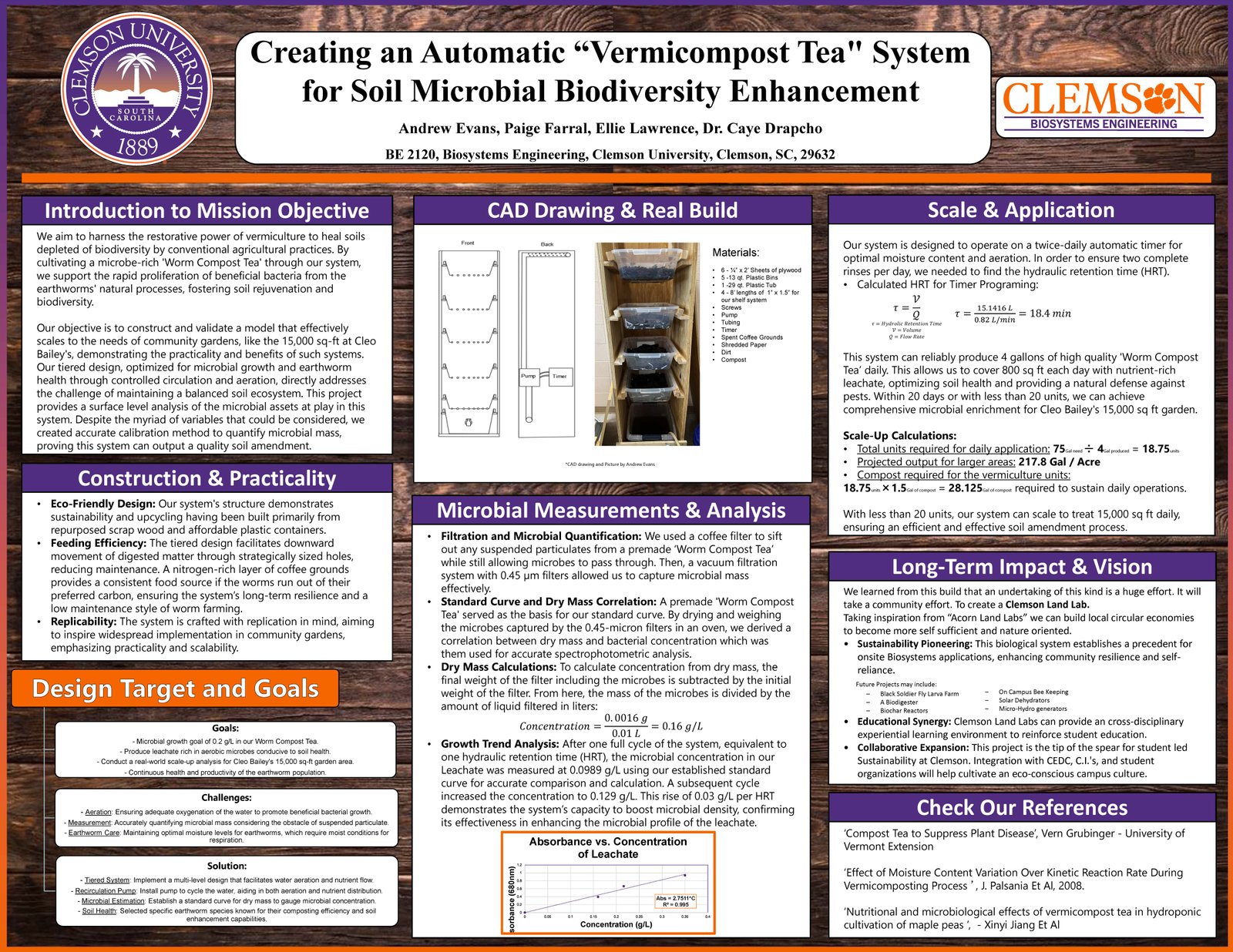
Vermicompost tea — liquid produced by aerating water through worm castings — is a well-documented soil amendment. But most small-scale systems require manual attention and inconsistent brewing cycles. This project designed and prototyped an automated system to brew and apply worm compost tea at a consistent quality, improving reproducibility and scalability for soil health applications.
The connection to regenerative agriculture is direct: worm castings are extraordinarily rich in beneficial microorganisms. The gut of a worm is one of the most biologically active environments in soil ecology. By automating the extraction and delivery of that biology, small inputs can produce large systemic effects on soil health.
This is biosystems engineering thinking applied to regenerative agriculture — not just "use more worm castings," but "design the system that makes it practical and repeatable at scale."
Why It Matters
Soil microbial diversity is the foundation of a functioning agricultural ecosystem. Synthetic fertilizers feed plants but bypass soil biology. Vermicompost tea is a way to inoculate degraded soils with the microorganisms that make nutrient cycling possible — without relying on external chemical inputs. Automation makes this accessible beyond the dedicated hobbyist.
Project Info
Supporting Documentation
Experimental data, trial records, and analysis available as supporting documentation. Contact for access.