People · Clemson, SC

The ones who showed up, and how it started.

The Hunnicutt Food Forest was built with practitioners who handed students their tools and their time. This page is for them.


How it started

Humble beginnings

We petitioned for a neglected patch of campus, and we got it. The first summer brought a drought, so we learned in a hurry: swales, Zuni waffle gardens, and every rain-harvesting idea we could find. The club has since had a complete turnover, and the dream that started it still stands: stream restoration through watershed-scale stewardship, with clean water and healthy habitats, starting right here.

The long version, for the porch-sitters

2024, three peach trees

We planted three peach trees on the hillside at our new food forest in the spring of 2024, and that summer South Carolina went into a deep drought. The one at the bottom of the slope, closest to the creek, was the last holdout, and two of us spent the summer hauling five-gallon buckets up from the creek to keep it going.

The next spring

We stopped rescuing plants one bucket at a time and asked why the land couldn't hold water on its own. We shaped the ground to slow rain down and let it sink. We covered bare soil. We planted roots that feed the microbes that feed everything else.

The next year more saplings went in the ground, and they held. The summer was gentler, and water also stays with us longer now. The plants feed the microbes, the microbes feed the roots, and every layer gains a little more footing.


Who taught us

Community mentors

Each of these people came to Hunnicutt or invited us into their world.

Farm Girl Deliveries · Six Mile, SC

Concetta Cone

Walked the team through keyline design in our first fall: finding the keyline, reading the slope, and showing where swales and contour plantings belong. Farm Girl Deliveries sent a volunteer crew to Hunnicutt on October 20, 2024, one of the first outside groups to come and work.

farmgirldeliveries.com

Treehouse Trade School · Seneca, SC

Scott Bunn

Came in September 2024 with a broad fork instead of a slideshow, and showed us deep soil aeration without compaction and how to read the land with your hands. He also walked us through keyline design thinking.

Treehouse Trade School · Seneca Treehouse Project

The Cleo Bailey Experiment · Anderson, SC

Zeph Smith

Co-founded The Cleo Bailey Experiment in 2020 with his wife Whitney, in a 1913 schoolhouse on two acres. Its Oasis Garden serves about 75 to 100 families a week. His January 24, 2025 kickoff event opened our year.

cleobailey.org

See all mentors
Bluestem Landscape Design · Seneca, SC

Jon Fritz

Helped design the Hunnicutt Food Forest and introduced us to the 12 Cues to Care, a framework for how a landscape shows that someone tends it. Every design decision at the site runs through it.

Bluestem Landscape Design

Earth Design · SC Native Plant Society

Rick Huffman

Founded Earth Design in 1996 and co-founded the SC Native Plant Society the same year. Our plant choices and our connection to the SCNPS spring sale come out of the work he helped build.

SCNPS profile

Stream Restoration CI · Clemson University

Ryan Jones

Field methods lead for the Spring 2026 Stream Restoration Creative Inquiry, behind the cross-section surveys, channel-shape analysis and bank erosion scoring at Hunnicutt Creek Reach 1.


Who backs the work

Donors, advisors and campus partners

Lowe's

Donated the first major round of plants: 4 blueberry bushes, 3 raspberry bushes and a grapevine. That gift filled out the first orchard zone in spring 2025.

Clemson Landscaping & Facilities

Campus partner for site access, tree corridor coordination along Newman Road, and the East Campus green infrastructure vision.

SC Native Plant Society

Runs the spring plant sale we use to source annuals, medicinals and natives, and published the first major press feature on Hunnicutt.

Bluestem Landscape Design

Jon Fritz's practice in Seneca helped lay out the food forest. It is named for little bluestem, the native grass that anchors much of what we plant.

See all campus clubs and academic partners

Clemson Agronomy Club

Carson Wargo coordinated the food forest plant list, chosen for Piedmont conditions and propagation. The club's greenhouse supplies native and pollinator-friendly species.

Carpentry Club

Built structures at the site, and is slated for the Purple Martin birdhouse builds and bench installation in Spring 2026.

Native Plants Club

Overlaps in mission and membership with us, and supports species selection, plant ID workshops and the SCNPS spring sale.

Clemson Engineers for Developing Communities

Our GIS and engineering model, and the inspiration for the planned digital twin workstation.

Clemson Center for Geospatial Technologies

Home of Mapping TigerTown, the 3D campus basemap where the Hunnicutt digital twin is planned to live.

Carolina Clear / Stormwater Team

Anaston Porter and the Carolina Clear program link the food forest's headwaters work to Clemson's stormwater and water quality network.


In the news

Where we've been written up

SC Native Plant Society

Hunnicutt Food Forest: Cultivating Land Ethics at Clemson

A feature on blending native plantings with regenerative design in Clemson's headwaters.

Read the article →
ATTRA · Sustainable Agriculture

Clemson University Student Organization Develops Food Forest

The National Sustainable Agriculture Information Service on student-led food forest development.

Read the article →
The Tiger · Clemson student newspaper

From Waste to Revitalized: Using Regenerative Agriculture to Feed the Community

Coverage of how the club started and its plans for regenerative food production on campus.

Read the article →

What we've done

Semester by semester

Pieced together from Instagram posts, newsletter issues and site records. If we missed something, tell us.

Spring 2026

Stream Restoration CI · Fig workshop · Tree line pilot
  • Jan 22
    Stream Restoration CI kickoff

    The first meeting of the Creative Inquiry. Ryan Jones joined as field methods lead.

  • Jan 31
    Stewardship Gaming story map published

    The digital twin roadmap and the plan for Mapping TigerTown integration.

  • Feb to Mar
    Roadside tree line pilot

    The first segment of the Newman Road tree line went in: one canopy tree with a ring of 3 to 5 perennial support plants, mulched and labeled.

  • Feb to Mar
    Fig propagation workshop

    A community event on fig cuttings, with curriculum and materials built by the club.

See the rest of Spring 2026
  • Jan 29
    CI: what restoration means, and what evidence we need first

    Agreed on a working definition and on the field evidence required before recommending anything for the creek.

  • Feb 5 to 6
    CI: desktop recon and Reach 1 field visit

    Desktop measurements on Feb 5, then a walk of Reach 1 with a cross-section at the breakout point.

  • Feb 12
    CI: cross-section analysis

    Plotted a cross-section of the creek and listed the data still needed.

  • Feb
    Purple Martin birdhouse and bench builds

    Build days scheduled for the birdhouses and a permanent bench at the site.

  • Mar 12
    CI guest speaker: Dr. Jones

    Guidance on diagnosing Reach 1 and what is appropriate for a student-led CI.

  • Mar to Apr
    Botanical Gardens and SCNPS sale coordination

    Planning pickup and transport for annuals, medicinals and native species.

  • Mar 26 to Apr 10
    CI poster build and FoCI Poster Forum

    The CI presented at the Clemson FoCI Fair on Apr 8 to 10.

  • Apr 2
    Hydrogeology Symposium

    The club presented at the 2026 Hydrogeology Symposium.

See earlier semesters

Fall 2025

Site work, press, Mapping TigerTown
  • Fall 2025
    ATTRA feature published

    ATTRA/NCAT featured the club as a national model for student-led food forest development.

  • Nov 2025
    SCNPS article

    The SC Native Plant Society published a feature on the Hunnicutt Food Forest.

Spring 2025

First major plantings, Lowe's donation
  • Spring 2025
    First major planting

    4 blueberry bushes, 3 raspberry bushes and a grapevine, from a Lowe's donation.

  • Spring 2025
    Maypop installed

    Native passionfruit joined the vine layer. It is edible, medicinal, and a host plant for Gulf Fritillary caterpillars.

  • Feb 2025
    Hunnicutt Food Forest story map published

    The site story map went live.

  • Spring 2025
    The Tiger feature

    Clemson's student paper covered the club and the food forest.

Fall 2024

Site work and the first mentors
  • Fall 2024
    Site work and outreach

    Site assessment, soil work and design planning, with outreach to the Cleo Bailey Experiment, the Seneca Treehouse Project and campus clubs.

Spring 2024

Founding semester, site grant, first planting
  • Spring 2024
    Students for Stewardship founded

    A small group of Biosystems Engineering students started a Clemson student organization for ecological restoration and hands-on land stewardship.

  • Spring 2024
    Land grant on Newman Road

    The university granted use of the hilltop site at the headwaters of Hunnicutt Creek.

  • Spring 2024
    Three peach trees planted

    The first trees on the hillside, ahead of that summer's drought.


In the field

Days at Hunnicutt

The Hunnicutt plot, bare ground in winter
Greenhouse seedlings, the spring comeback
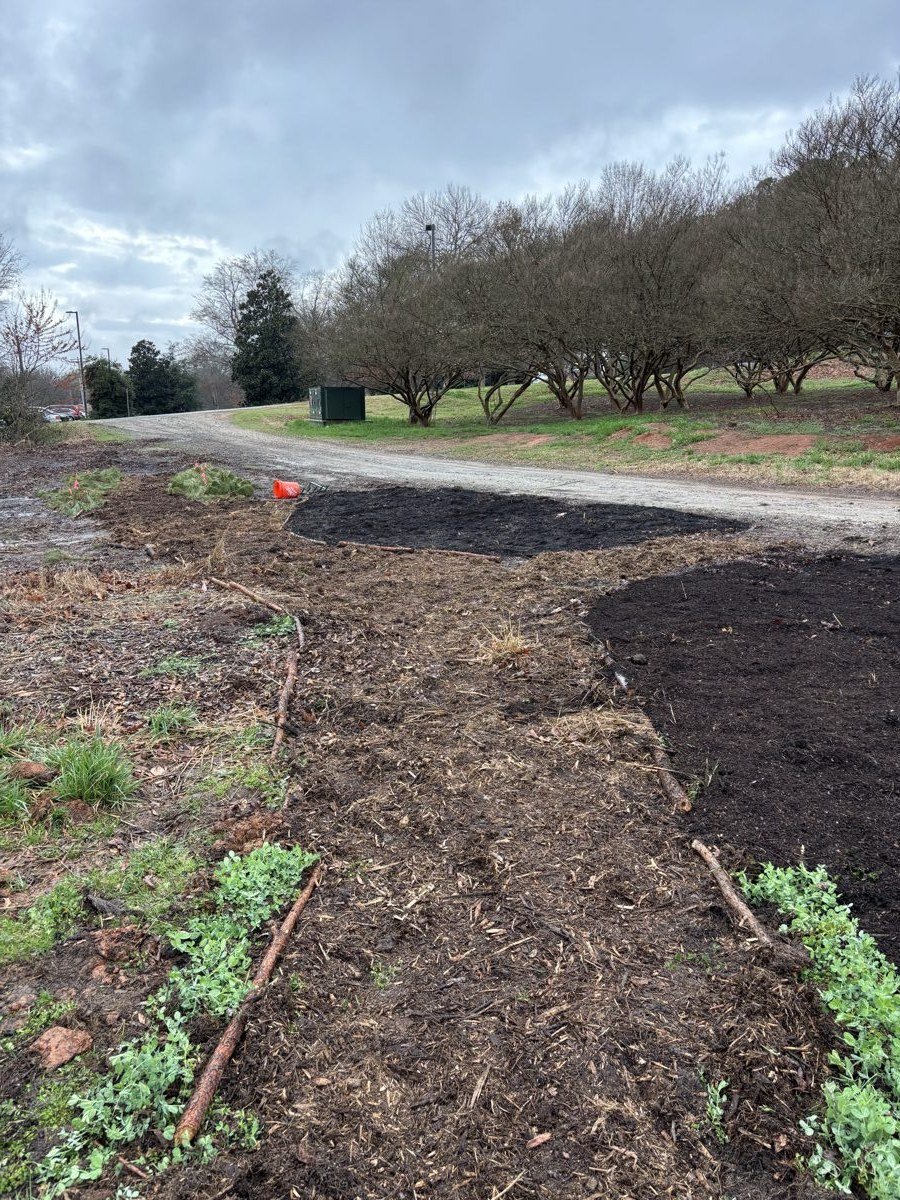
Freshly mulched beds along the drive, crepe myrtles behind
New beds along the drive, crepe myrtles behind
Planting and building at the food forest

Become a partner

Build something at Hunnicutt

We're looking for organizations, clubs and community members who want to build something real at Hunnicutt. Reach out.